A series of exchanges from a recent online financial advice column:
"Hi. My nephew is going into business for himself. It's a business I don't know much about (green energy stuff), but he's a smart kid, and I think he's going to do well. But being young, he doesn't have a whole lot of money, or a very long credit history, so the banks he's approached haven't been jumping at the chance to finance him. He says one bank is willing to loan him the money he needs, but only if someone with a good credit history will co-sign the loan. He's asked me if I would co-sign. What should I do?
"Sam in DC"
Dear Sam -
Co-signers typically will have well-established credit to help the borrower qualify for the loan. But being a co-signer isn't like giving a person a reference on a job application. It carries a weighty responsibility and some potentially significant implications that need to be understood before it's taken on.
That's because you're not just vouching for your nephew's ability to repay the debt, you're promising to pay it yourself if he defaults.
Most people would probably say, "That's fine. My (insert relative or friend) since third grade has a good job, is very responsible and will make every single payment."
And that may be absolutely true. It's also true that unanticipated things happen. People lose their jobs, they get sick and they die unexpectedly. If, for whatever reason, the borrower doesn't make the payments, you're on the hook.
You need to consider your nephew's character and ability to make the payments, and whether you could afford the debt if he defaults.
The main thing you need to understand is that you are signing that loan for a reason. If the loan goes bad, you have to pay it back. You need to look at this as if you were taking out the loan yourself.
The FTC puts the situation into simple terms in its information on co-signing. You're being asked to take a risk that a professional lender has decided not to take.
The risks are real and significant. The lender doesn't have to exhaust every possible means to get the money from the borrower before he comes after you. The bank can select which debtor he wants to pursue. He'll pick the one who is the most likely to pay the quickest.
A few months later:
"Hi - remember me? My nephew had started his own business and needed someone to co-sign his loan. You told me the risks involved, and after weighing them as best I could (I really don't understand this green energy stuff his business is about), I decided to co-sign the loan anyway.
"Now my second nephew is going into the same line of business and he also needs a co-signer to get a loan. Since the first one seems to be working out, I'm going to co-sign for him also, even though the amount he needs to borrow is about twice what my first nephew borrowed. I think it should be okay, even though my credit score is a little lower than the last time I had checked - I guess some lenders are a little worried about my ability to pay my bills, even though I've never in my life missed a payment, or even been late.
"Sam in DC"
A few months later:
"Hi, it's Sam in DC again; hope you remember me - I co-signed on loans for my two nephews so they could start their own green energy stuff businesses.
"I guess I should have listened to you. Nephew #1 told me he's burned through all the money the bank loaned him and his company isn't selling nearly enough of his green energy thingies to pay to keep the lights on, never mind pay his employees or pay the bank back. So he's going out of business. And now his bank is coming after me to repay the loan. I'm not happy about it, but I guess I can afford it. My nephew says there are federal investigators looking at his business records; they evidently think he might have done something criminal, and people are asking if I was somehow involved.
"I'm still guaranteeing the loan to nephew #2, but now I'm worried. Is there any way I can get out of this?
"Sam in DC"
Dear Sam -
You are well and truly screwed. When the federal government tells you co-signing on a loan is risky business, don't you think you should listen?
A few minutes later:
"I am the federal government."
Wednesday, September 14, 2011


Friday, September 9, 2011
Ten Years Later
Ask someone to name a hero these days, and you're likely to get the name of an athlete or an entertainer, someone who gets paid millions to ply a trade that presents about as much risk to life and limb as waiting tables.
We're somehow too cool to have real heroes any more, people who willingly put themselves in harm's way for someone else's benefit. Most of the time, the only popular recognition they get is when their heroism is of the man-bites-dog variety and the local eyewitless news sends someone over to film the eight-year-old who rescued his entire family from their burning house three days after he did the same thing for his neighbors. And having had his fifteen seconds of fame, he fades back into the crowd and we turn our attention back to the vulgar doings of Snooki and The Situation.
We know the names of the evil and the deranged. We know who Jared Lee Loughner is, but do we know the names of the people who subdued him and saved Gabrielle Giffords's life?
So ten years later, you doubtless recognize the name Muhammad Atta.
And you probably don't know the name of the man who single-handedly saved almost as many lives on September 11, 2001, as Atta destroyed that day.
You don't know the name of the man who survived the 1993 World Trade Center bombing, and, convinced that it would happen again, used his position as his company's director of security, to implement a program of emergency evacuation procedures. Every three months, everyone at his company's office in the World Trade Center was required to participate in emergency evacuation drills. Everyone - even the corner office executives.

The man who, after all his employees were safe, went back into the building to make sure everyone got out.
Who was last seen on the tenth floor of World Trade Center Tower 2, going up, and whose body was never recovered.
There is no monument or memorial to him at Ground Zero, and are apparently no plans for one. We're too cool to have heroes any more.
Rick Rescorla. September 11th's greatest hero.
We're somehow too cool to have real heroes any more, people who willingly put themselves in harm's way for someone else's benefit. Most of the time, the only popular recognition they get is when their heroism is of the man-bites-dog variety and the local eyewitless news sends someone over to film the eight-year-old who rescued his entire family from their burning house three days after he did the same thing for his neighbors. And having had his fifteen seconds of fame, he fades back into the crowd and we turn our attention back to the vulgar doings of Snooki and The Situation.
We know the names of the evil and the deranged. We know who Jared Lee Loughner is, but do we know the names of the people who subdued him and saved Gabrielle Giffords's life?
So ten years later, you doubtless recognize the name Muhammad Atta.
And you probably don't know the name of the man who single-handedly saved almost as many lives on September 11, 2001, as Atta destroyed that day.
 |
| Yes, he'd served in the U.S. Army |
You don't know the name of the man who survived the 1993 World Trade Center bombing, and, convinced that it would happen again, used his position as his company's director of security, to implement a program of emergency evacuation procedures. Every three months, everyone at his company's office in the World Trade Center was required to participate in emergency evacuation drills. Everyone - even the corner office executives.
And you don't know the name of the man who, on September 11, 2001, calmly supervised the evacuation of his company's 2,700 employees - after building officials announced the building was safe and they should return to their desks. The man who kept everyone calm, who reminded them of the drills they had practiced, who sang God Bless America and other songs of his native Cornwall through his megaphone.
 |
| September 11th's greatest hero, on the day he died |
Who was last seen on the tenth floor of World Trade Center Tower 2, going up, and whose body was never recovered.
There is no monument or memorial to him at Ground Zero, and are apparently no plans for one. We're too cool to have heroes any more.
Rick Rescorla. September 11th's greatest hero.
Friday, July 29, 2011
Debt Ceiling Phonus Balonus
I don't know how the final numbers will shake out, but as of right now, the competing House and Senate versions both claim they'll increase the debt ceiling by $2 trillion or so, in exchange for $2 trillion or so in spending cuts over the next ten years - all give or take a trillion or two. The biggest sticking point seems to be whether it will be a short-term increase (six months or so) or long-term (just past the next election).
Either way, we're going to be facing another debt ceiling debate by December 2012. So the ceiling increase is good for only about 18 months, tops.
But the proposed spending cuts are spread out over ten years. Presumably, we'll be having this same argument next year or early 2013.
Some questions:
Anyway, the debt ceiling increase is meaningless. You could increase it to infinity + a jillion skillion dollars + a unicorn. The bond ratings outfits are going to downgrade our debt regardless, because they don't give a rap what our debt ceiling is. They care about what we're doing to fix the clusterfark we're in, not what we're going to allow ourselves to borrow.
And we ain't doing squat about that. Invest in China.
Either way, we're going to be facing another debt ceiling debate by December 2012. So the ceiling increase is good for only about 18 months, tops.
But the proposed spending cuts are spread out over ten years. Presumably, we'll be having this same argument next year or early 2013.
Some questions:
- What spending do they think they're going to cut in 2013 in exchange for the 2013 debt ceiling increase?
- Why do they think that spending can't be cut today, but they'll be able to cut it in 2013?
- The proposed cuts that are being spread out over the next ten years - will they be cuts compared to what was spent this year? Or will the cuts that they're looking to schedule in, say 2018, be cuts compared to whatever ridiculous amount was spent in 2017? In other words, if, say, the EPA's budget this year is $40 billion, and it's scheduled to get cut $10 billion in 2018, will its budget be reduced to $30 billion in 2018? Or will it be reduced $10 billion from the $65 billion it had meanwhile increased over the previous five years? In other words, what is the baseline for that $10 billion cut?
- And aren't all these proposals for cuts ten years from now a pointless, phony exercise, since nothing that Congress does today is binding on any future Congress?
- Shut up. We'll cross that bridge when we get to it.
- We can't afford to make those cuts even today. If we make those cuts, who's going to
- stop black-market sales of incandescent light bulbs;
- support NPR;
- pay the salaries of Outreach Coordinators, Diversity Liaisons, and Sustainability Facilitators;
- pay for high speed government rail service between Chicago and Iowa City;
- make sure there are government warning labels on all lawn mowers warning people not to stick their limbs into them;
- buy machine guns for Mexican drug lords;
- grope potential five-year-old terrorists at boarding gates.
- The 2018 EPA budget will be $93 billion, which is a cut of $11 billion from 2017's $65 billion because otherwise they would have gotten a budget of $97 billion. If that doesn't make sense, it's because you're smarter than your congressman, who, being an imbecile, understands it perfectly.
- Yes.
Anyway, the debt ceiling increase is meaningless. You could increase it to infinity + a jillion skillion dollars + a unicorn. The bond ratings outfits are going to downgrade our debt regardless, because they don't give a rap what our debt ceiling is. They care about what we're doing to fix the clusterfark we're in, not what we're going to allow ourselves to borrow.
And we ain't doing squat about that. Invest in China.
Thursday, July 14, 2011
Social Worker Managing a Two Billion Dollar Portfolio
Michigan Senator Debbie Stabenow has a graduate degree in social work from Michigan State university.
Would you trust her to manage your money?
Would you trust her to manage $2 billion of your money?
I hatehatehatehatehate when politicians use the word "investing." Whenever a politician uses any variation of the word "invest," he's lying.
That's important, so let me say it again: Whenever a politician uses any variation of the word "invest," he's lying.
Investing means giving X dollars to someone in the hope that you'll get X+Y dollars back in Z time. With X, Y, and Z, you can calculate a return on investment, or ROI.* Example: You invest $100 (X) in Consolidated Fuzz Corporation stock on January 1. On December 31, you sell the stock for $125.00 (Y). Your ROI is 25% per year (Z).
Politicians only use the X amount above - and they almost always get it wrong by factors of magnitude - and never, never, never give you a number for Y or Z. What they do with your money bears less resemblance to real investing than it does to throwing fistfuls of seed corn out a car window and expecting ethanol pumps to sprout up where they land.
In Stabenow's case, that may be the literal truth. She thinks she can feel global warming when she's flying, so who knows what she thinks would happen if you threw corn out your car window?
* If you don't understand that because your degree is in something that ends with the word "studies," take a semester of accounting 101 at your local community college, after you've mastered some basic math, such as calculating percentages.
Would you trust her to manage your money?
Would you trust her to manage $2 billion of your money?
Sen. Debbie Stabenow was also making headlines this week, touring Michigan to promote her Battery Innovation Act — legislation she plans to introduce in the Senate this week that would coordinate all aspects of advanced battery production, from research and development to manufacturing.
While the terms of Dow's recent partnership weren't disclosed, Stabenow's proposed legislation calls for the federal government to invest $2 billion into the effort that she hopes spurs a growing market.
I hatehatehatehatehate when politicians use the word "investing." Whenever a politician uses any variation of the word "invest," he's lying.
That's important, so let me say it again: Whenever a politician uses any variation of the word "invest," he's lying.
Investing means giving X dollars to someone in the hope that you'll get X+Y dollars back in Z time. With X, Y, and Z, you can calculate a return on investment, or ROI.* Example: You invest $100 (X) in Consolidated Fuzz Corporation stock on January 1. On December 31, you sell the stock for $125.00 (Y). Your ROI is 25% per year (Z).
Politicians only use the X amount above - and they almost always get it wrong by factors of magnitude - and never, never, never give you a number for Y or Z. What they do with your money bears less resemblance to real investing than it does to throwing fistfuls of seed corn out a car window and expecting ethanol pumps to sprout up where they land.
In Stabenow's case, that may be the literal truth. She thinks she can feel global warming when she's flying, so who knows what she thinks would happen if you threw corn out your car window?
"Climate change is very real," she confessed as she embraced cap and trade's massive tax increase on Michigan industry - at the same time claiming, against all the evidence, that it would not lead to an increase in manufacturing costs or energy prices. "Global warming creates volatility. I feel it when I'm flying. The storms are more volatile. We are paying the price in more hurricanes and tornadoes."This person is trying to spend $2 billion of your money. No wonder we're going broke.
* If you don't understand that because your degree is in something that ends with the word "studies," take a semester of accounting 101 at your local community college, after you've mastered some basic math, such as calculating percentages.
Sunday, July 10, 2011
Happy Independence Day, America, and God Save the Tsar!
So last night, Cunegonde and I and some friends went to Oronoco Park here in the lovely Democratic People's Republic of Alexandria, Virginia, to celebrate America's 235th birthday and DPRAV's 262nd, the celebration of both which is traditionally the Sunday after Independence Day. It was a lovely blankets-and-lawn-chairs-and-coolers kind of evening, a rockabilly band entertained us for about the first half-hour we were there, local dignitaries made speeches, DPRAV fed birthday cupcakes to the crowd, and about an hour before the 9:30 scheduled time for the fireworks display, the Alexandria Symphony Orchestra took the stage and treated us to a wide range of music, from Duke Ellington to Rogers and Hammerstein to Gustav Holst (Jupiter, the Bringer of Jollity, from The Planets), to music from Harry Potter.

At 9:30, it was dark enough for the fireworks to begin, and the orchestra played the last ten minutes or so of Independence Day fireworks' standard accompaniment, Tchaikovsky's famous 1812 Overture.
Am I really the only person in America who finds this a ridiculously insulting juxtaposition of fireworks and music? Here's what 1812 is about, according to Wikipedia:
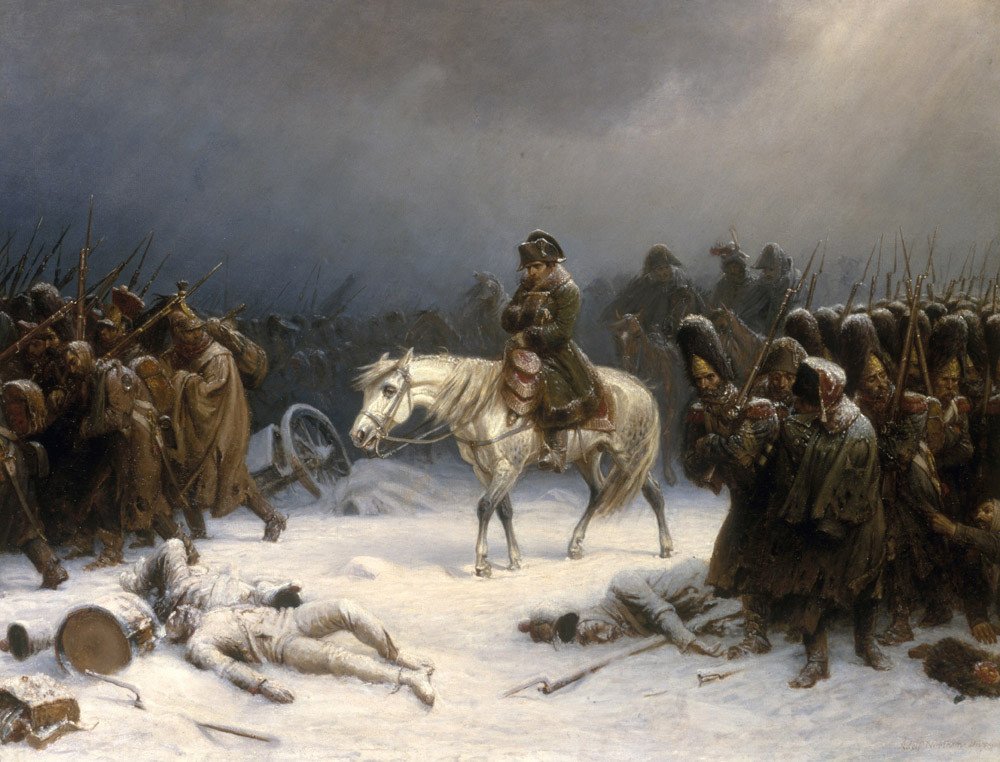
An overture full of Russian folk tunes, La Marseillaise, the French national anthem (which Napoleon had actually banned in 1805, but never mind), and Russian hymns God Save the Tsar!, and God Preserve Thy People. What all this has to do with America's or DPRAV's birthday escapes my poor understanding. This is the celebration of the defeat of one European autocrat's armies by the armies of another European autocrat (with a huge assist from the weather), neither of whom had any use for what happened here in 1776, and both of whom happily imprisoned or murdered any of their royal subjects who had any thought of trying to bring 1776 to Paris or Moscow.
But we have to have 1812 when we have fireworks, because, well, you know, cannons! Really? Is that the only justification for playing this musical affront to every American value on the anniversary celebration of the founding of our country? Where we not only believe that all men have the inalienable right to life, liberty, and the pursuit of happiness, but consider it to be as obvious a fact as 2+2=4?
If there is no other music out there that would be suitable for the occasion, can't we find someone who can write uplifting, rousing, Independence-Day-fireworks-worthy music, to include cannons for people unwilling to give up the tradition, to replace this misbegotten celebration of dictators, death and destruction?
Is there anyone who thinks John Williams isn't up to the job?
At 9:30, it was dark enough for the fireworks to begin, and the orchestra played the last ten minutes or so of Independence Day fireworks' standard accompaniment, Tchaikovsky's famous 1812 Overture.
Am I really the only person in America who finds this a ridiculously insulting juxtaposition of fireworks and music? Here's what 1812 is about, according to Wikipedia:
The music can be interpreted as a fairly literal depiction of the campaign: in June 1812, the previously undefeated French Allied Army of over half a million battle-hardened soldiers and almost 1,200 state-of-the-art guns (cannons, artillery pieces) crossed the Niemen River into Lithuania on its way to Moscow... we hear the ominous notes of approaching conflict and preparation for battle with a hint of desperation but great enthusiasm, followed by the distant strains of La Marseillaise, the French National Anthem, as the French approach... The Tsar desperately appeals to the spirit of the Russian people in an eloquent plea to come forward and defend the Rodina (Motherland)... we hear traditional Russian folk music. La Marseillaise returns in force with great sounds of battle as the French approach Moscow... the great armies clash on the plains west of Moscow, and Moscow burns. Just at the moment that Moscow is occupied and all seems hopeless, the hymn which opens the piece is heard again as God intervenes, bringing an unprecedented deep freeze with which the French cannot contend (one can hear the winter winds blowing in the music). The French attempt to retreat, but their guns, stuck in the freezing ground, are captured by the Russians and turned against them. Finally, the guns are fired in celebration and church bells all across the land peal in grateful honor of their deliverance from their "treacherous and cruel enemies."
An overture full of Russian folk tunes, La Marseillaise, the French national anthem (which Napoleon had actually banned in 1805, but never mind), and Russian hymns God Save the Tsar!, and God Preserve Thy People. What all this has to do with America's or DPRAV's birthday escapes my poor understanding. This is the celebration of the defeat of one European autocrat's armies by the armies of another European autocrat (with a huge assist from the weather), neither of whom had any use for what happened here in 1776, and both of whom happily imprisoned or murdered any of their royal subjects who had any thought of trying to bring 1776 to Paris or Moscow.
But we have to have 1812 when we have fireworks, because, well, you know, cannons! Really? Is that the only justification for playing this musical affront to every American value on the anniversary celebration of the founding of our country? Where we not only believe that all men have the inalienable right to life, liberty, and the pursuit of happiness, but consider it to be as obvious a fact as 2+2=4?
If there is no other music out there that would be suitable for the occasion, can't we find someone who can write uplifting, rousing, Independence-Day-fireworks-worthy music, to include cannons for people unwilling to give up the tradition, to replace this misbegotten celebration of dictators, death and destruction?
Is there anyone who thinks John Williams isn't up to the job?
Tuesday, June 14, 2011
I Just Want to Buy Groceries, Dammit
So I'm checking out at the Safeway. I've swiped my Safeway Club card and the cashier is ringing things up. I swipe my credit card, and the display asks me if I want to make a donation to fight prostate cancer.
I hit "No." Ten seconds later, the cashier asks me if I'd like to make a donation to fight prostate cancer. "Not today, thanks," I reply, and cleave her skull in twain with the meat cleaver I got free for buying $25 worth of premium Angus beef today. Yeah, I know, she has to ask, it's part of her job, and she probably hates it as much as I do, but still.
Yes, I hate prostate cancer. And breast cancer. And homelessness. And the fact that some people can't afford to pay their utility bills. That's why Cunegonde and I make charitable contributions to the Salvation Army and other charities and at least two churches (Cunegonde writes out checks to both a Southern Baptist church and a Unitarian one, which always makes me smile). And on April 15, we add them up and put them on our tax return, and get a tax deduction so the federal deficit increases by a few bucks. And we don't have to scrounge up a bunch of Safeway receipts that show we donated a dollar to end world hunger - if the receipts even show the donation.
I hit "No." Ten seconds later, the cashier asks me if I'd like to make a donation to fight prostate cancer. "Not today, thanks," I reply, and cleave her skull in twain with the meat cleaver I got free for buying $25 worth of premium Angus beef today. Yeah, I know, she has to ask, it's part of her job, and she probably hates it as much as I do, but still.
Yes, I hate prostate cancer. And breast cancer. And homelessness. And the fact that some people can't afford to pay their utility bills. That's why Cunegonde and I make charitable contributions to the Salvation Army and other charities and at least two churches (Cunegonde writes out checks to both a Southern Baptist church and a Unitarian one, which always makes me smile). And on April 15, we add them up and put them on our tax return, and get a tax deduction so the federal deficit increases by a few bucks. And we don't have to scrounge up a bunch of Safeway receipts that show we donated a dollar to end world hunger - if the receipts even show the donation.
Tuesday, June 7, 2011
We Need A Twelve-Step Program For Jerkaholism
So this week, we're treated to the spectacle of yet another public figure getting caught with his pants down, so to speak. And the morning news-lite shows are full of "experts" saying he needs to get into some kind of celebrity rehab so he can come out and proclaim himself all scrubbed and clean and ready to run for mayor of New York, or get a CNN talk show, or resume his acting career or return to the PGA tour.
Does this strike anyone else as being some kind of publicity racket? Once upon a time, you went into rehab for a busted-up knee, or for drug addiction or alcoholism, with varying rates of success. But sex-addiction rehab?
Does anyone seriously believe this so-called "sex addiction" nonsense? Are we to believe that these rich and powerful celebrities are in the thrall of an uncontrollable sex drive, which they are powerless to do anything about? Has anyone ever suggested that Benjamin Franklin was a sex addict? How about John F. Kennedy? They can control everything else about their lives - and often want to control our lives as well - but they're completely unable to keep their hotrods in their pants?
Please. Just once, I'd like to hear one of these clowns say, "Dammit, I totally screwed up. I knew exactly what I was doing, and I thought I could get away with it. I could have stopped any time I wanted to; I just didn't want to, and, up to now, didn't need to. Now I need to, and that's going to be the end of it. I don't need to see some famous therapist to figure out why I was doing this - I know why. And I don't need a therapist to tell me what I need to do - I know what I need to do. I am not powerless over sex; I can straighten out my own life - all I need to do is stop having sexual relations with people who aren't my wife."
Does this strike anyone else as being some kind of publicity racket? Once upon a time, you went into rehab for a busted-up knee, or for drug addiction or alcoholism, with varying rates of success. But sex-addiction rehab?
Does anyone seriously believe this so-called "sex addiction" nonsense? Are we to believe that these rich and powerful celebrities are in the thrall of an uncontrollable sex drive, which they are powerless to do anything about? Has anyone ever suggested that Benjamin Franklin was a sex addict? How about John F. Kennedy? They can control everything else about their lives - and often want to control our lives as well - but they're completely unable to keep their hotrods in their pants?
Please. Just once, I'd like to hear one of these clowns say, "Dammit, I totally screwed up. I knew exactly what I was doing, and I thought I could get away with it. I could have stopped any time I wanted to; I just didn't want to, and, up to now, didn't need to. Now I need to, and that's going to be the end of it. I don't need to see some famous therapist to figure out why I was doing this - I know why. And I don't need a therapist to tell me what I need to do - I know what I need to do. I am not powerless over sex; I can straighten out my own life - all I need to do is stop having sexual relations with people who aren't my wife."
Subscribe to:
Posts (Atom)